Client
Redesigning an existing AI stylist app around one continuous product loop. Core styling tasks became 30% faster in usability testing.

Beyond the first scan
Plantix is a graduation project exploring what happens after a plant is identified. A scan can name a plant or suggest a problem, but people still need to understand the result and decide what to do next.
I led a two-designer team, owning product direction, UX architecture, core flows and final design decisions. I also worked on research, prototyping, UI and testing.

Research shifted the focus to ongoing care
Interviews, a survey with 30 plant owners and a review of existing apps showed that identification only solves a brief moment. People needed to know why their plant was changing, how serious it was and which advice applied to them.
Beginners wanted a plain-language answer and a next step. Experienced owners wanted history, trends and control. I used progressive depth: a clear answer first, with detailed information available when needed.
Making three features work as one product
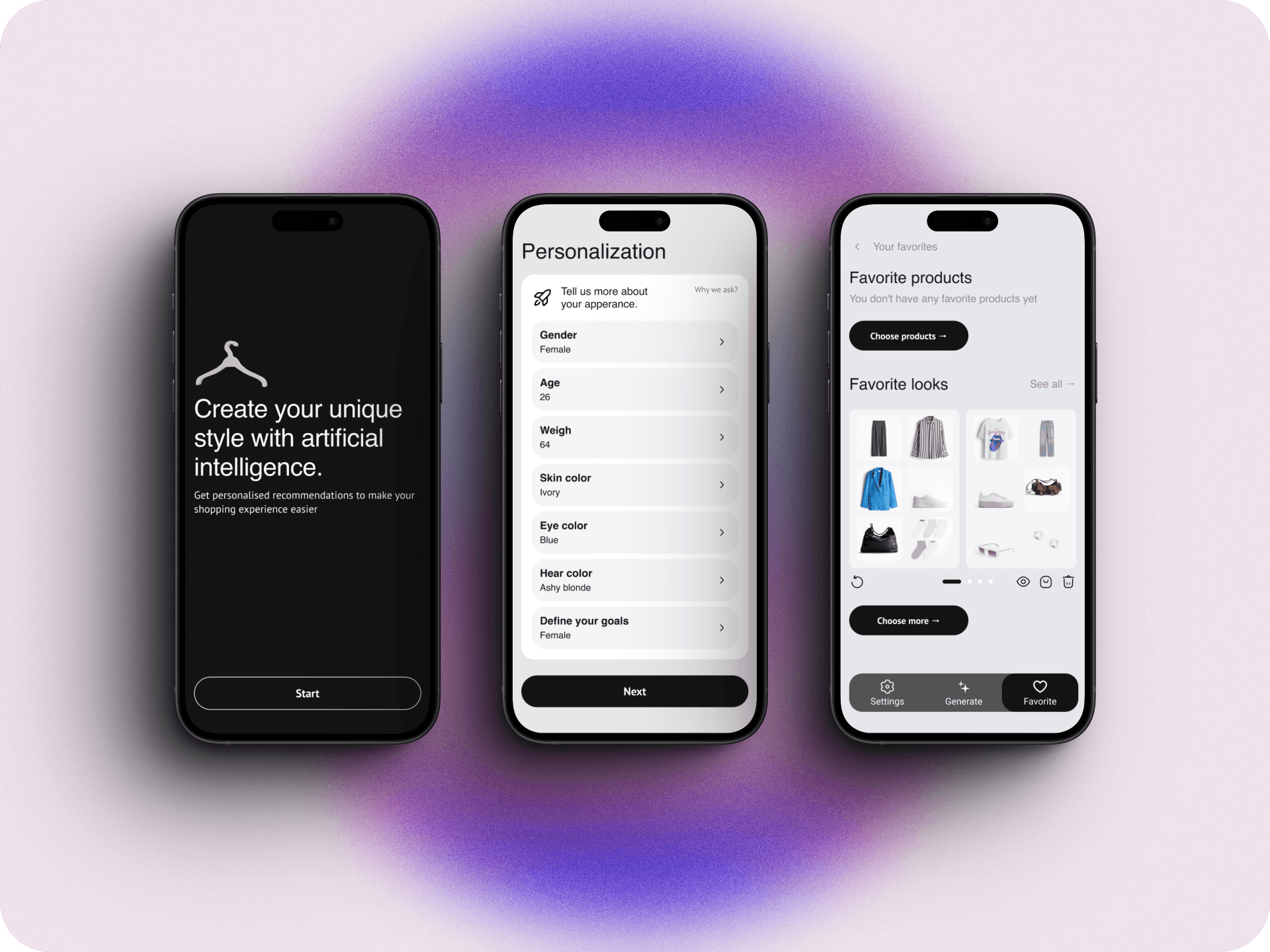
Stylee connects a digital wardrobe, AI outfit recommendations and shopping. I joined an existing product where moving between these features often felt disconnected.
As Product & UX/UI Designer, I worked on making wardrobe management easier, recommendations more useful and shopping a natural continuation of styling.
The friction around the AI
I reviewed product analytics, session behaviour and qualitative feedback from active and inactive users, reviews and social channels. People wanted to maintain their wardrobe with less effort, find clothes faster and create outfits in fewer steps.
Recommendation quality also depended on the surrounding experience. An incomplete wardrobe and unclear preferences gave the system less useful context, while awkward next steps limited the value of even a good suggestion.
A wardrobe that is useful on its own
I simplified categories, filtering and search, made item information more predictable and shortened the path from finding a piece to using it in an outfit.
People should not have to maintain a perfect database for an AI model. A well-structured wardrobe helps them organise and use their clothes, while giving recommendations better context.
Recommendations people can edit and act on
I connected suggestions to existing clothes and preferences, making the next actions clearer: review owned items, adjust the look, create something similar or shop for a missing piece.
Where useful, I explored showing why an item was suggested. The aim was to make the recommendation understandable and editable.
Shopping keeps the styling context
Shopping now starts from the missing piece in an outfit. People can explore relevant items while still understanding the look they want to complete. Purchased pieces can return to the wardrobe and inform future recommendations.
Testing revealed the details still missing
I used unmoderated usability testing around wardrobe, outfit and shopping scenarios. Users navigated filtering and outfit creation more easily, and core styling tasks became 30% faster.
Testing also exposed unclear handling of less common categories, including accessories, and undo actions that were too easy to miss while editing an outfit. I carried these findings into the next iteration.
Some shopping friction appeared to come from product or technical performance. I kept it separate from interaction-design findings rather than treating every problem as a UI issue.

Impact and product logic
The measured result was a 30% reduction in task completion time across core styling flows. The available evidence does not support a post-release conversion claim.
The wardrobe now provides context for recommendations; recommendations become editable outfits; missing pieces lead to relevant shopping; and new clothes return to the wardrobe. Each feature makes the next one more useful.
What I took from the project
An AI feature depends on the product around it. Input needs to be useful to the person providing it, and output needs to be easy to understand, edit and act on. That is where most of the meaningful redesign work happened.
DISCOVER MORE